Phase 2
Objectives and Assessments
This study proposes to investigate the idea that implementing a technology-based intervention plan with students who have moderate to severe learning disabilities can increase their mathematics comprehension. This technology based solution allows for students to identify their own strengths and weaknesses with multiplication and provides independent practice opportunities for students who entered fourth grade not having a solid understanding of basic multiplication concepts and facts.
Rationale
Mathematics is sequential in that one skill builds upon the previously learned skill. Students entering fourth grade need to have a solid understanding of basic multiplication facts in order to have greater success acquiring additional skills in mathematics. Being able to automatically recite basic multiplication facts is a prerequisite skill for fourth graders. The Maryland Voluntary State Curriculum (2012) outlines, under Standard 6.0 Knowledge of Number Relationships and Computation/Arithmetic for grade 3 objective, students should “Represent multiplication and division basic facts using number sentences, pictures, and drawings” with an assessment limit of using basic facts of no more than 9 x 9 = 81 (mdk12.org). This indicates students are asked to learn basic facts by the end of third grade. The State Curriculum indicates under Standard 6.0 for fourth graders that they will be asked to multiply whole numbers using one 1-digit factor by up to a 3-digit factor (mdk12.org). This indicator stipulates that students are now expected to use their knowledge of basic multiplication facts to understand more complex mathematics such as multiplying 1-digit by 3-digit numbers. As authors M.D. Roblyer and Aaron Doering (2013) point out in their publication Integrating Educational Technology into Teaching “When the absence of prerequisite skills presents a barrier to higher level learning or to passing tests, directed instruction usually is the most efficient way of providing these skills” (Doering & Roblyer, p.48).
This technology-based intervention plan is based on a direct instruction approach to teaching and learning. Direct instruction refers to a more traditional way for students to learn as explained in the text Integrating Educational Technology into Teaching (2013), “Directed models stress individual work using traditional teaching and learning methods because they are designed to address problems of accountability and quality assurance in our educational system” (Doering & Roblyer, p. 46). Since the learning issue I have identified deals with students' abilities to remember basic multiplication facts the resources which will be used in my intervention project will be organized using a direct model of instruction.
According to authors M.D. Roblyer and Aaron Doering (2013), technology integration based on directed methods of instruction can remedy identified weaknesses or skill deficits, promote skill fluency or automaticity, support efficient, self-paced learning, and support self-paced review of concepts (Doering & Roblyer, pp. 48 - 49). Integrating a technology-based method of intervention helps teachers address specific instructional needs and pin-point resources which closely match the student’s learning problems.
This technology intervention plan offers an advantage to students because the resources used gives them access to the following during their independent practice time: interaction with lesson activities, lesson review, repeated instruction, and instant feedback.
Audience
The learners who will be taking part in the intervention program are the fourth grade math students in my class who scored in the bottom 27% on a multiplication pre-test at the website Multiplication.com (basically the lowest six students out of a class of 22 students).
Objectives and Assessments
In order to determine whether or not the technology-based solution was a success the following behavioral learning objectives and assessment instruments were used:
|
Instructional Issue |
Students lack basic mathematic skills including math fact recall with automaticity and math fact fluency. |
|
Technology Based Solution |
Students will accurately answer basic multiplication facts without the use of a calculation device (calculator) and will use computer based software programs which focus on one multiplication fact at a time; beginning with the multiplication facts for one and proceeding to the facts of twelve in an incremental fashion. The program will provide instantaneous feedback for correct and incorrect answers. The students will practice these online activities in class for 75 minutes each week. |
|
Major Outcome |
Students will be able to correctly solve basic multiplication facts for one factor at a time (for instance all factors for one from 1 – 12. |
|
Assessment Measure |
The students will write the correct answer for 25 basic multiplication facts on a weekly paper and pencil formative assessment type quiz without the use of a calculation device, timed for two-minutes, and progressing by one fact family at a time. |
|
Objective Statement: By completing the weekly online activities the students will demonstrate their ability to compute multiplication problems by correctly answering 25 multiplication questions on a paper and pencil quiz given weekly in order to exercise the skills of multiplication with 95% accuracy. | |
|
Instructional Issue |
Student’s inability to memorize basic multiplication facts contributes to low classroom quiz and test scores. |
|
Technology Based Solution |
While using online computer based intervention programs the students will interact with avatars which will guide them to explanations regarding correct answers to basic multiplication problems, allowing for greater understanding. Once a wrong answer is chosen, an avatar acts as a coach who explains the reasons for the correct answers. The student is then given the opportunity to change to the correct answer. |
|
Major Outcome |
Students will be able to demonstrate knowledge of basic multiplication facts by correctly solving multiplication factors from 1 through 12. |
|
Assessment Measure |
On a summative assessment with forty questions the students will accurately answer basic multiplication facts from 1 through 12 without a calculation device, within 5 minutes, and with 90% accuracy on a final exam. |
|
Objective Statement: At the conclusion of the computer based intervention program the students will be able to demonstrate their ability to compute multiplication problems of basic multiplication facts from 1 through 12 with automaticity as demonstrated on a 40 question paper and pencil final exam and with accuracy of 90%.
| |
|
Instructional Issue |
Students' lack of motivation to practice multiplication facts contributes to a) less practice time, b) a decreased understanding of multiplication, and c) progress toward learning basic facts. |
|
Technology Based Solution |
While using online computer based programs the students will interact with animated games and video presentations which will increase the student’s engagement in the process of memorizing multiplication facts in a fun and visually stimulating way. |
|
Major Outcome |
Students will be able to demonstrate knowledge of basic multiplication facts by creating a multiplication facts graph entitled “My Fact Check Progress Graph” to chart their progress and make predictions about future performance. |
|
Assessment Measure |
On a formative self-check assessment with columns and rows, the students will accurately collect their own data from graded weekly quizzes and chart their progress in a log with 100% accuracy. |
|
Objective Statement: At the conclusion of each weekly quiz, given as part of a technology-based intervention program, the students will create a graph charting their growth and progress toward their ability to compute multiplication problems of basic multiplication facts from 1 through 12 with automaticity as demonstrated on a 25 question paper and pencil quiz given weekly. | |
Assessments
In the research article Remedying Math-Fact Deficits with DPR, authors Philip Axtell, Brian Poncy, and Christopher Skinner (2010) explain that DPR stands for Detect, Practice, and Repair when it comes to strategies for learning and assessing multiplication facts. They explain DPR is used to “enhance basic fact automaticity and learning rates by having students practice only those facts in need of remediation” (Axtell et al., p. 343). While students are working through my intervention program, they will detect their strengths and weaknesses with multiplication facts. They will be able to recognize which facts they must focus on through the use of a pre-assessment and through on-going formative quizzes. They will use various forms of online resources to practice and strengthen their weaknesses. These resources include online lesson presentations and activities on websites and with Power Point Presentations, and identify the basic facts they need to focus on and improve through the use of weekly quizzes. We will gauge their progress toward mastery by examining the results on a final assessment.
The multiplication pre-test and final exam will come from Multiplication.com (see image below). The pre-assessment and the summative assessment will be a timed 40 question online test in which the students will correctly answer as many questions as possible in a four minute time period.

http://multipliction.com
Quiz
Weekly formative assessments will be administered in the form of a 25 question quiz timed for two minutes. These quizzes were designed to periodically evaluate the effectiveness of on-going practice through the use of technology.

Graphing and Predicting
Accompanying the quizzes will be a multiplication sheet entitled “My Fact Check Progress Graph” (shown below). The students will create a graph to chart their results and to make predictions about the next quiz they will take. In the article Minute Math: An Action Research Study of Student Self-Assessment, authors Brookhart et al. (2004) research the topic of self assessment and its role in student motivation. They explain: “Motivation theorists suggest that student self-assessment will contribute to feelings of control over one’s own learning, of choice and of agency, and of self-worth” (p. 214). Students who are engaged in examining their quiz results and making predictions on future performance may make greater efforts during the practice phase. As authors Brookhart et al. (2004) stated “Theorists who focus on the formative feedback loop emphasize that the learning task requires students to compare their performance with desired performance and take steps to close that gap” (p 214). Therefore the students in this technology-based intervention will be appraising their own performance by recording their progress on a graph with their actual score next to their predicted score each week after their quiz is graded and predicting their performance on the following quiz. Using the multiplication graph to chart their progress allows students to continually collect data on their own progress and will increase the likelihood of being self-motivated to learn their multiplication facts.

Technology Based Solution
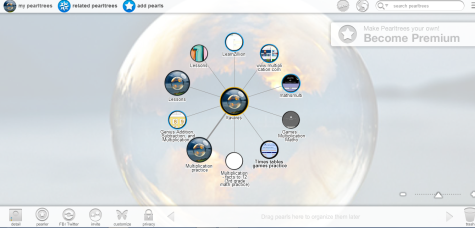
The image below is a link to the Pearltree I have created to serve as a technology hub where my students can find lessons and activities to support their learning as related to the objectives in this technology based intervention program. Click on image to view.
Pearltree
Multiplication Lesson Video
Here is an example of a lesson video students will watch to help them understand basic multiplication concepts (from Khanacademy.org):
Multiplication Power Point Presentation
Here is an example of one of the lesson presentations my students will use to practice learning their multiplication facts:

|
Multiplication pre test.pdf Size : 67.223 Kb Type : pdf |
|
|
Multiplication Quizes.pdf Size : 268.188 Kb Type : pdf |
|
|
Multiplication log.pdf Size : 252.559 Kb Type : pdf |

|
Phase 2.docx Size : 177.854 Kb Type : docx |
